




Since header bidding reshaped programmatic, one unintended consequence has become increasingly difficult to ignore: auction duplication.
The same impression can be offered across multiple platforms at the same time, taking different routes through resellers, SSPs, and exchanges before ultimately reaching a buyer. At scale, this creates a fragmented supply chain that introduces unnecessary complexity.
What initially looked like increased competition has, in many cases, turned into self-competition. DSPs can end up bidding against themselves across multiple paths, driving up infrastructure costs, increasing query volume, and making pricing signals harder to interpret.
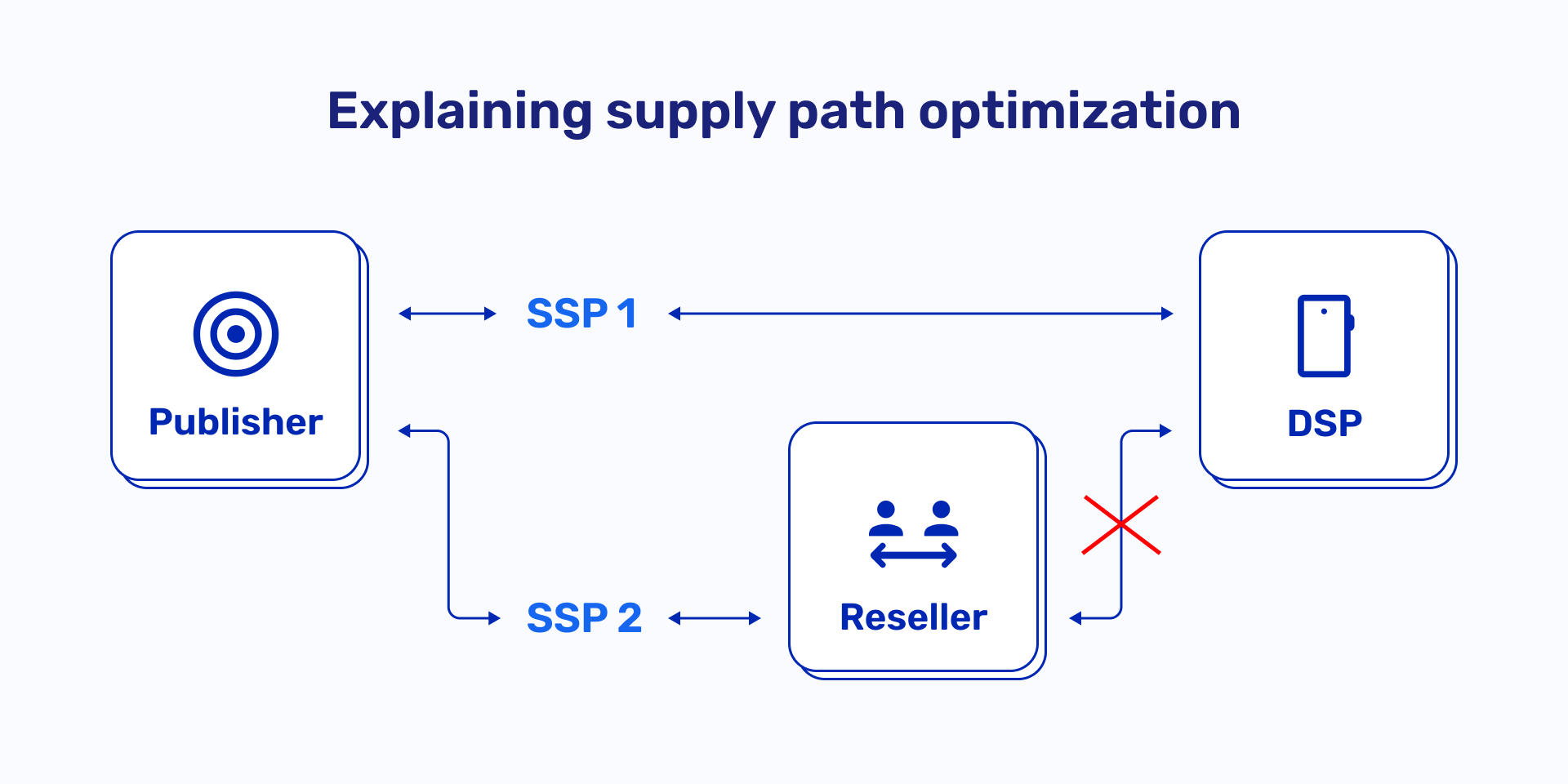
Supply path optimization, or SPO, emerged as a response to that complexity. At its core, it is about identifying the most efficient and transparent route between advertiser and publisher, then consolidating spend toward those preferred paths.
In mobile environments, this becomes even more important.
What supply path optimization actually is
Supply path optimization is a buy-side strategy used by DSPs and agencies to determine which supply routes consistently perform best.
When the same impression can be accessed through multiple exchanges or resellers, buyers evaluate factors such as:
- Win rate consistency
- Fee transparency
- Infrastructure efficiency
- Inventory quality
- Signal reliability
Based on that analysis, they prioritize the cleanest and most predictable paths.
The objective is not simply to reduce partners. It is to reduce duplication, improve auction efficiency, and ensure that media spend flows through high-quality, transparent supply.
Research shows that the majority of brands and agencies now actively implement SPO strategies. Transparency, brand safety, and fraud mitigation are major drivers, but economics also play a central role. Reducing redundant queries and intermediary fees improves overall return on media spend.
SPO is no longer optional. It is embedded in how modern buying teams operate.
Why mobile supply chains are different
Unlike web inventory, mobile ads are delivered through SDKs embedded directly inside publisher apps.
A typical mobile monetization stack may include:
- A mediation SDK running the core auction logic
- Advanced bidder SDKs participating in real-time bidding
- Traditional waterfall networks called sequentially
- Reseller exchanges layered behind direct integrations
When improperly structured, this stack can generate multiple bid requests for a single impression opportunity. From a DSP perspective, that increases infrastructure load and can result in self-competition across paths.
Modern in-app bidding setups aim to reduce this duplication by allowing demand partners to compete simultaneously in a single auction event rather than being called sequentially through a waterfall.
When configured correctly, this:
- Improves price discovery
- Reduces unnecessary bid traffic
- Lowers infrastructure costs on the buy side
- Creates cleaner auction signals
Under SPO frameworks, buyers typically prefer access to inventory through these cleaner, more direct SDK paths instead of fragmented, reseller-heavy chains.
Why SPO matters for advertisers
For advertisers and agencies, SPO delivers measurable operational and financial benefits.
It enables:
- Better budget control by reducing duplicate bidding
- Clearer visibility into fees and inventory origin
- Improved signal quality for optimization models
- More stable campaign performance
As programmatic expands across mobile, connected TV, and emerging channels, auction duplication is no longer limited to web environments. SPO has become a cross-channel discipline.
Why SPO matters for publishers
Although SPO is primarily driven by buyers, publishers are directly affected by how those strategies reshape demand allocation.
As DSPs and agencies consolidate spend toward preferred supply routes, the structure of a publisher’s monetization stack increasingly influences access to premium budgets.
Publishers that provide the following are better positioned to capture consolidated brand demand:
- Transparent auction mechanics
- Direct SDK integrations
- Reduced reseller layers
- Consistently high-quality inventory
SPO does not randomly redistribute spend. It tends to reward efficient, trustworthy supply with greater long-term demand concentration and yield stability.
The shift toward direct supply paths
Programmatic buying is steadily moving toward supply paths that:
- Reduce intermediary hops
- Enable cleaner auction dynamics
- Preserve signal quality
- Provide transparent fee structures
In mobile, this often means working through direct SDK integrations rather than fragmented chains of resellers and indirect exchanges.
Direct supply paths shorten the distance between buyer and publisher, reduce duplication, and create more predictable auction outcomes. As SPO strategies mature, supply path structure becomes a core component of monetization strategy rather than a background technical detail.
Capture brand demand with BidMachine DIRECT placements
BidMachine DIRECT placements are built around a clean, SDK-first supply model designed to align with modern SPO expectations.
By enabling DIRECT placements, publishers can:
- Provide buyers with a more efficient path to inventory
- Reduce intermediary layers
- Align supply with SPO-driven buying strategies
- Access incremental brand demand focused on transparency and efficiency
As brand budgets continue shifting into mobile apps, supply path quality increasingly determines where that spend flows.
If you are looking to align your inventory with modern SPO expectations and capture premium brand demand, explore BidMachine DIRECT placements and evaluate how a cleaner supply path performs across your apps.

