





Most publisher apps eventually hit the same ceiling, where installs are steady, DAU looks healthy and retention is acceptable, yet ARPDAU refuses to move.
At that point, teams often default to the wrong conclusion: “Revenue is capped unless we show more ads.”
In reality, ARPDAU plateaus usually have less to do with ad volume and more to do with how monetization decisions are made day to day.
ARPDAU is a short-term metric. It reacts immediately to changes in pricing, demand, ad formats and placement logic. When it is flat, it is telling you something very specific: your current monetization setup is not extracting incremental value from existing engagement.
This post focuses on how publishers actually increase ARPDAU, without degrading retention or user experience.
Why ARPDAU is the metric publishers should watch daily
ARPDAU measures average revenue per daily active user. Unlike ARPU or LTV, it does not hide behind long time windows or cohort smoothing.
If you:
- Add a new rewarded placement
- Change auction mechanics
- Introduce a new demand source
ARPDAU will move within days, sometimes within hours.
That makes it one of the best metrics for answering a simple question:
Did this change work?
A 10–15% ARPDAU lift after a monetization change usually means it did, while a flat line is usually a warning.
Segment before you monetize
One of the most common ARPDAU mistakes is applying a single monetization strategy to all users.
High-retention users, churn-risk users, payers and non-payers behave differently. Monetizing them the same way leads to wasted impressions and missed revenue.
The counterintuitive insight here is this:
Churn-risk users are often under-monetized, while high-quality users are over-monetized early.
Effective segmentation usually looks like:
- Early-session monetization for users unlikely to return
- Delayed or lighter monetization for high-retention cohorts
- Different monetization intensity by geo and engagement depth
ARPDAU increases when monetization matches likelihood to return, not just session count.
Focus on attention, not just spend
Most apps have a large population of users who will never make an in-app purchase. Treating them as “non-monetizable” caps ARPDAU by definition.
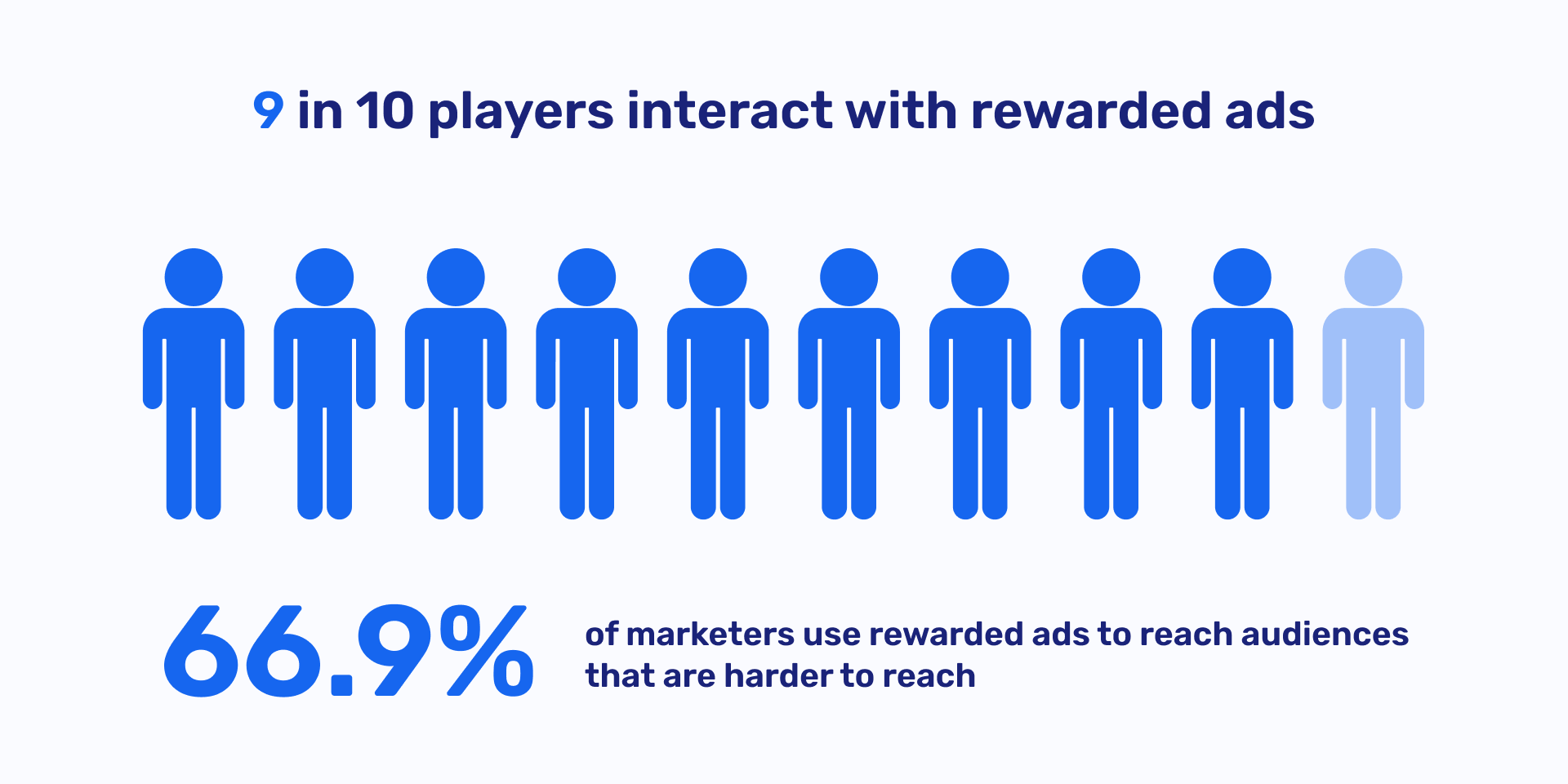
Rewarded advertising works because it monetizes attention instead of intent to spend.
The key insight most teams miss is that rewarded ads fail when used as a replacement for core progression and work best when they accelerate it instead.
When rewarded ads are positioned as optional acceleration, bonus access or convenience, they generate revenue without training users to disengage.
This is why rewarded formats are often responsible for some of the fastest ARPDAU lifts publishers see, especially in casual, utility and engagement-driven apps.
Increase competition instead of ad load
Another ARPDAU myth is that revenue only increases when impression volume increases.
In practice, many ARPDAU gains come from better auctions, not more ads.
Long waterfalls rely on historical averages, fixed CPMs and sequential calls. They create latency and often undersell impressions when real-time demand is higher.
In-app bidding improves ARPDAU through:
- Simultaneous competition
- Market-driven pricing
- Fewer failed ad calls
A key but often overlooked factor is latency.
Reducing time-to-ad-fill alone can recover meaningful revenue that would otherwise be lost.
Many publishers see ARPDAU lift after moving traffic to bidding even when both ad frequency and impression count remain unchanged.
Treat ARPDAU as a feedback loop
ARPDAU is most powerful when it is used operationally.
Publishers who improve ARPDAU consistently tend to:
- Review it daily
- Test one variable at a time
- Ship monetization changes weekly
One common mistake is testing too many things at once. ARPDAU moves, but teams cannot attribute why.
Clear ownership, narrow tests and short cycles turn ARPDAU into a decision-making tool instead of a vanity metric.
When infrastructure becomes the bottleneck
At scale, ARPDAU often stops growing because the monetization stack limits what teams can test, which is where infrastructure choices start to matter.
Platforms like BidMachine are built to help publishers unlock incremental ARPDAU by improving competition, transparency and control at the impression level.
Publishers can:
- Drive incremental ARPDAU using the BidMachine SDK through real-time in-app bidding
- Gain greater transparency and control with BidMachine Mediation
- Unlock premium brand demand via DIRECT placements through clean, direct supply paths
Each of these can be tested across specific apps, formats or geographies, with ARPDAU used as the primary success metric.
If you’re looking to push past an ARPDAU plateau, explore BidMachine’s SDK, mediation and DIRECT placements, and evaluate how real-time competition and cleaner demand paths perform across your apps.

